Introduction

I hope you'll join me in creating memories and sharing the passion of experimentation.

Anything goes, but food, sewing, hosting and DIY are my favourites, what are yours?

Showing posts with label Projects. Show all posts

Tuesday, 24 February 2015

Make your own...

...Oven Mitt, in just a couple of hours!

You may be thinking, why on earth would I make an oven mitt when you can pick one up so easily in almost any store, but I say why not?! Especially when you can make it all pretty and match your kitchen accessories. Once you've got the basic pattern you can go bananas with embellishments, yay!

Here's how, lets get started!

You'll need just a few things to get started:
- Your chosen fabric, four 20x30cm rectangles should do it (2 of these rectangles can be left over fabric as they will be on the inside)
- Thick heat resistant wadding, two 20x30cm rectangles
- Paper to draft a pattern on
- Some binding
- The essentials: Scissors, thread, pencil etc
- Then the fun part, embellishments!! I used a bit of lace trim


First you'll want to take your wadding and sandwich it between two pieces of fabric (one outer and one inner piece). Next pin and tack the fabric to the wadding to secure it in place. Repeat with the other piece of wadding and fabric rectangles.

Next sew parallel diagonal lines all the way across the pieces of fabric/wadding in one direction, and then the other direction to create a diamond pattern. The spacing of lines could depend on your fabric design, mine were about 1inch apart. You should end up with 2 quilted rectangles.


Cue tea break, and a sneaky biscuit :)

Lay your hand on the pattern paper and roughly draw round your hand with a space for your thumb, this takes a bit of judgment and practise as you don't want to end up with a really tight oven glove! Don't forget to add a seam allowance all the way round too (I may have done this 1st time around).


Cut out your two quilted rectangles using your newly created pattern piece. Then pin and sew the two pieces right sides together all the way round, keeping the bottom open. If you'd like a little hook to hang up your oven mitt this is the time to add it in. Pop a little loop of binding inside the two pieces before you sew them together.

Nearly there.... Turn the mitt the right way out and use the binding to encase the raw edges.

Now the fun part, embellish embellish embellish! Lace, applique, ribbon, buttons, anything you like!

All Done :) Well done.

What embellishments did you go with?


Tuesday, 6 August 2013

Homemade footstool/storage box

I must admit this project had been half finished since Easter, but last weekend I finally completed it, and I'm so happy I did. Although there's lots of things I could improve on next time, I'm really excited to share it with you as I'm pretty pleased with how it turned out :)

I took my inspiration after a trip to one of our local home furnishings shops. On sale were these storage cubes on little feet which were really sweet and I was tempted to buy a couple... until I saw the price. £45 for what is essentially 6 pieces of wood - I don't think so. I decided to make one myself with a few added touches.

I had a few scrap pieces of wood, a tin of wood stain, some spare fabric, wadding leftover from another project and some spare tacks and hinges in the shed, so all I needed to find was some foam and some wooden feet. I was on a mission. A trip to the market later and I had the foam square (for 50p)! Next the feet - If you had time then I would suggest searching markets and carboot sales for old stools where you can chop off the feet. TIP: Alternatively you could make it a little bit more contemporary and use brass door knobs as feet (I was very tempted). But I was determined to find the perfect thing the same day, so I logged on to eBay, and to my delight found 4 hand crafted wooden feet. PERFECT!

Now here's how I put everything together...

My first tip would be to draw out your plan and make sure you've got the measurements correct. There's nothing worse that chopping all the bits of wood and finding out that it doesn't fit together. 


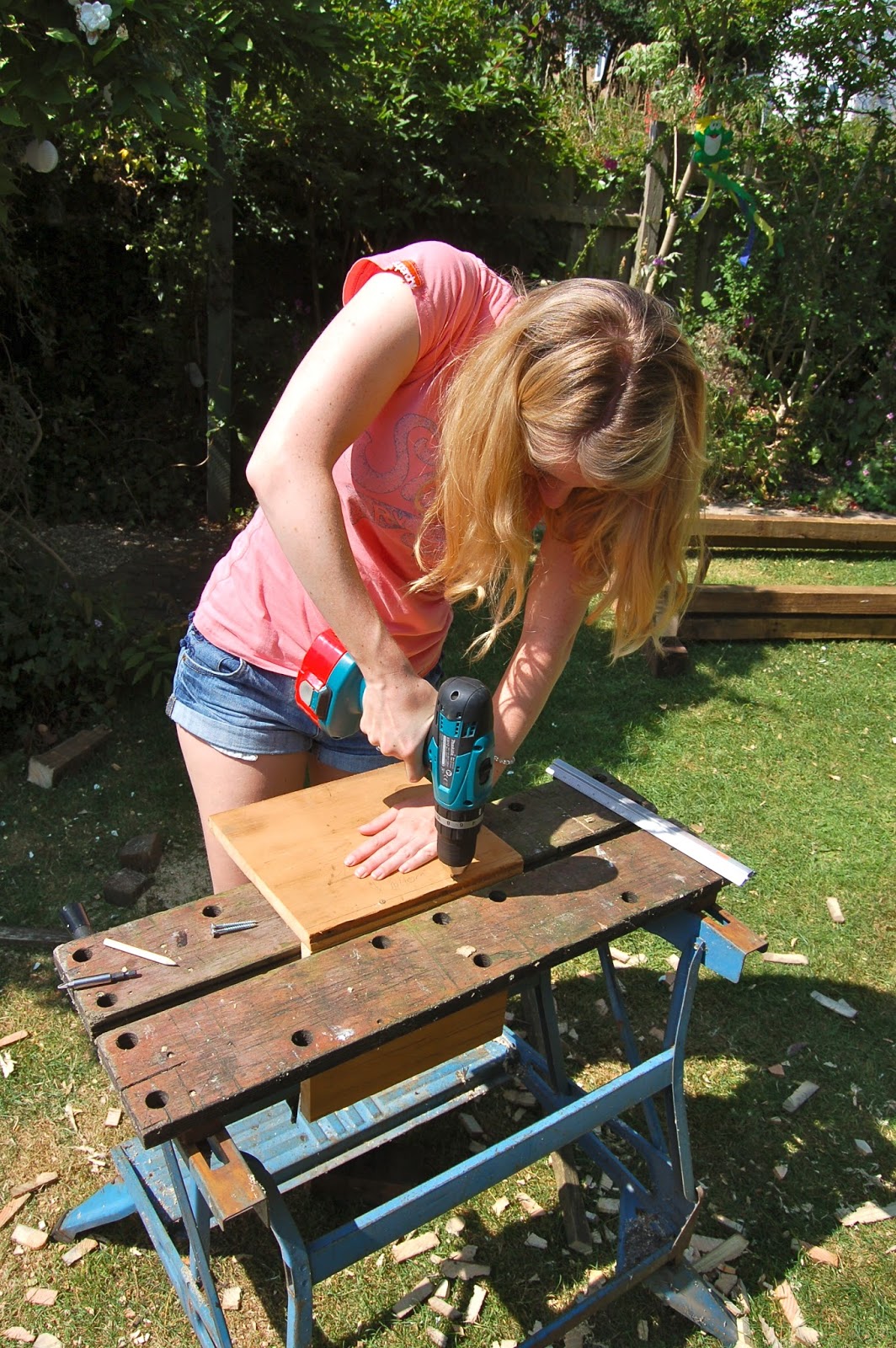
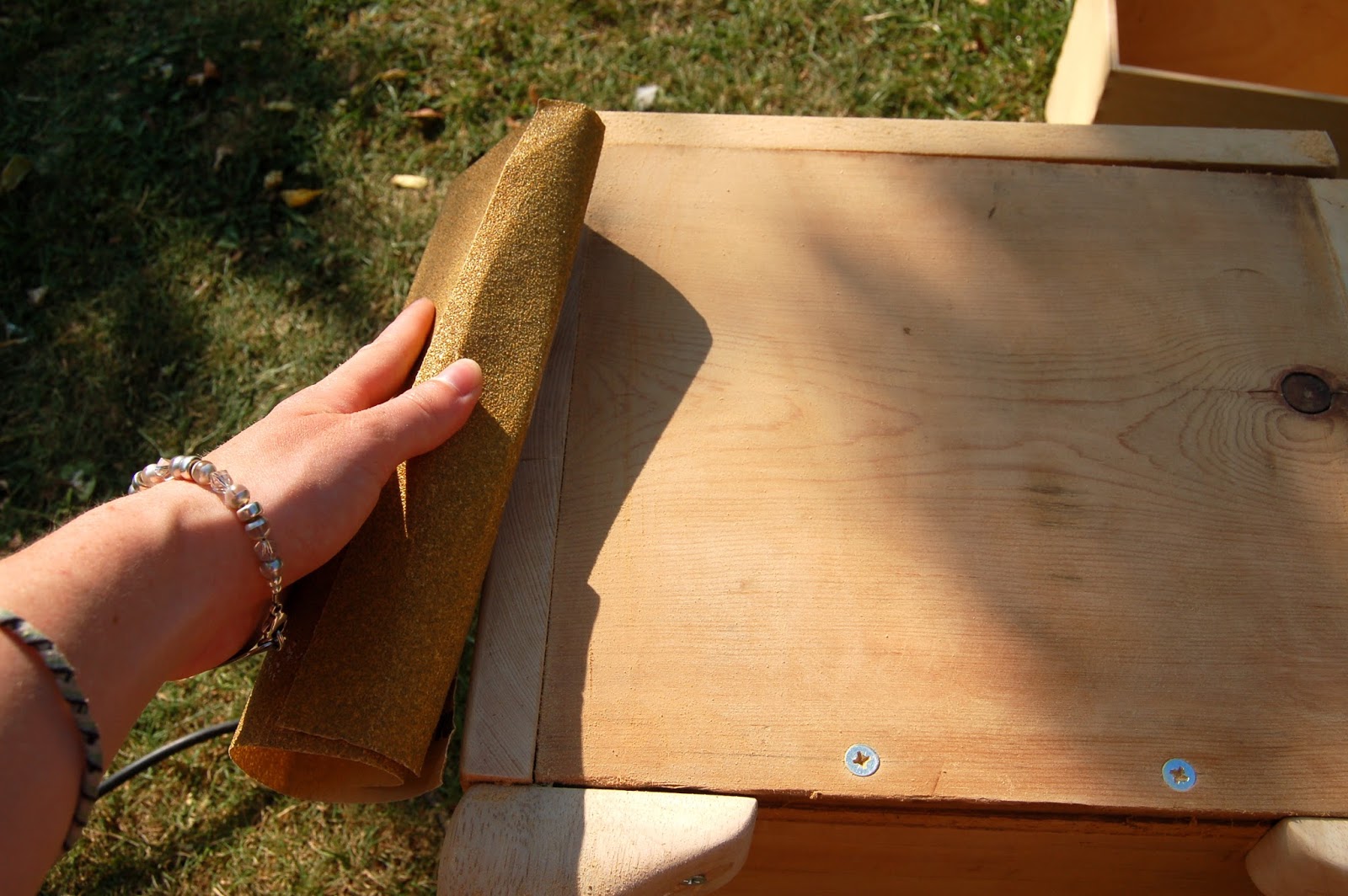
Once you have your plan, you can start cutting your wood to size. I based my sizing on a couple of books that I was intending to store inside. Once you're done, make sure they are all sanded down and then you can start assembling.
I chose some 180 degree hinges, but you can play around with some in a DIY store. Some you can see when you close the box, some you can't.


TIP: I would always recommend pilot holes before putting in the screws, that way your wood won't split, especially if it's a fairly thin piece of wood!

Once everything is screwed together (including the feet) it's time for one last sand. Maybe you'll be more accurate than me, but I always end up with a little overhang of the edges when screwing things together, so I like to sand everything down so it's all nice and inline.


Got your wood stain ready? Time for painting! You could change the effect of the stool by painting with emulsion and then sanding it down for a weathered look, but I wanted a more simple design, so I got my paintbrush and gave the box two coats of stain. Now that everything is painted, try and balance your box so that the least amount of edges are touching the surface so that everything can dry. If you were more patient than me, then you'd wait until one side was dry so you could lay that side down to paint the rest....but that's a little bit too sensible for me...


Now, I happen to think this box looked good without the fabric cover on, and I almost stopped at this stage - but I had a plan, and I stuck to it. On with the foam and wadding!


Cut out your foam to the size of the lid, and a piece of wadding big enough to stretch over the foam and down to the bottom of the lid. Cut your fabric about 1cm larger (on all sides) than your piece of wadding. Now for the fiddly part - if you have a helper, call them over.

Lay your foam on the lid, wadding over the foam, and material over the wadding. Next your going to take 4 tacks and hammer them in on the middle of each side - pull the material tight over the foam and wadding, making sure the whole lot stays


central on the top of the box, hem the material so that the hem line is inline with the bottom of the lid, and hammer in your tack. Well done, you've done the most difficult part!


Work your way around the box with more tacks, folding the corners neatly, making sure to pull your fabric tight all the way around.

And that's it, you're done. One functional, yet beautiful footstool. Anyone can give this a go. And if you're worried about the woodwork, do not panic, if it ends up a little wonky just cover all the sides in fabric!

Send in pictures of your boxes :)


Saturday, 20 April 2013

Adapted Wartime Dress


A few months ago I was on the hunt for a dress that was suitable for work, but wasn't black or made out of really thick material. The shops didn't delivery quite what I had in mind so I decided to take this pattern and turn it from a semi-casual jersey dress to something a little bit smarter. 


I always make it difficult for myself (unintentionally); this pattern is designed for jersey, but I wanted a more fitted finish, so I used a non-stretch fabric. Because the pattern is made to be slightly more casual and less fitted, I had to make three fundamental changes:

1) I added a zip underneath my left arm, so that I could actually get in and out of the dress

2) I had to take some of the material out of the front bodice panel; I made it a little shorter from top to bottom. If I was making this pattern out of jersey (like I was supposed to) this extra fabric would have draped over nicely and made it very flattering. However, because I was making it out of a slightly stiffer fabric, that extra bit of fabric would have poofed out and looked pretty weird.

3) I also took some material out of the front skirt so that the gathers weren't there. I just took in the side seams at the top, which maybe isn't the most professional way of doing it, but it seemed to work out just fine for me :)

I chose to use a medium weight polycotton, somewhat similar to a tea towel... you laugh, it has been commented on. My only trouble with using this type of fabric was that it frayed constantly and I don't have an overlocker at the moment (it's on my list), so I had to do some careful zigzag stitching along the edges in places.

TIP: Although I used a non-stretch fabric, I did choose one with a little 'give' - I'd suggest this to get the best results.

Don't be scared to experiment!


And i'd love to see your creations, so please do share them!

Sunday, 24 February 2013

Feature chimney breast

I admit, when I opened this from Josh on Christmas Day I wasn't exactly sure what it was...the only thing I knew was that he'd been hiding himself away in the loft making it for hours.

All became clear when I laid it out on the floor...


I'd wanted a big map to pin favourite holidays and plan adventures on, but I never imagined that he'd make me one from cork floor tiles!

The boards had a backing, which peeled off to reveal a sticky back, like double sided sticky tape

He pinned the boards to the wall and projected an image on to them so that it could be drawn straight on to the boards. Taking a stanley knife, the image was cut out carefully, and this was the result.


When I realised what it was I was so excited :) I couldn't wait to go home and put it up. The sticky backing made it really simple to put on the wall too.

Try it yourself, or maybe try something slightly different; how about a big map of the UK and plan  adventures closer to home? Oh, and don't forget to share your creations!

Sunday, 17 February 2013

Sunday (sewing) Treats - Wrap Dress

I don't know about you guys, but today was the first time I didn't feel like my fingers and toes were going to fall off the moment I even thought about the outside. The sun was out - and I almost felt warm for a while.

This MUST mean SPRING IS HERE (I don't want to hear any 20th March rubbish). Prime time to whip out the wrap dress I made last year.


Wrap dresses are really quite simple to make once you know your way around a sewing machine. Once you've had a go at a couple of simple cotton dresses, give a wrap dress a try. Only a few different pattern pieces are used and you don't have to be too exact with your cutting and sewing; the nature of the dress and material is quite forgiving.

For someone who has a couple of sewing projects under their belt, I would say this type of dress would take you about 6 hours, so a perfect 'Sunday Treat' activity or 2 evening's work. Pretty efficient I'd say!

TIP: I have since made this dress for a friend as a birthday present - why don't you give it a go; a lovely handmade present :) I knew her rough dress size, but didn't worry too much about sizing, as you wouldn't notice if it was a slight bit too big or small. Perfect! Maybe she'll be willing to put a picture of her wearing it up here...hint hint ;)

I have recently been bought some lovely blue jersey fabric which i'm going to make another wrap dress out of. This time i'll make a short sleeve version, perhaps experimenting with lace trim. I'll post some pictures up here when I've finished. Wish me luck!

TIP: Try experimenting with lightweight and heavyweight jersey materials. This one is a very lightweight jersey, with only a little stretch in it. I recommend starting with a jersey with only a small amount of stretch if you're new to the sewing world.

Some good Wrap Dress patterns are listed below (I've listed their original source, but have a search on the internet for British suppliers of the patterns. There's plenty out there - just type in the pattern code into a your search bar):
Vogue V8379
McCall M5974
Butterick B5206
StyleARC - Kate Dress
- I can't recommend highly enough Lisa Comfort's 'Sew Over It' Ultimate Wrap Dress course. You'll come away with a wrap dress pattern, one completed wrap dress and a whole heap of new knowledge and skills. The teachers will help you at every stage, and are so welcoming - all you need to do is choose your fabric and book a place on the course. Plus you get cake and tea whilst you sew, what more could you ask for? I love it there!

Send me some pictures of your completed wrap dresses and feel free to ask any questions. Sunday Love x x x

Tuesday, 29 January 2013

Venturing into the world of home smoked foods

Smoked bacon is my boyfriend's (Josh) favourite thing in the whole world (I'm pretty sure it comes above all friends and family). So after weeks of agonising over what to get him for Christmas, I suddenly had a revelation in the form of a smoker, so that he could make his own.

"Cold or Hot smoker?" I hear you ask... I didn't know there was a difference either :s

Simply, hot smoking cooks whatever you put inside, and cold smoking doesn't. Hot smoking uses wood chips, and cold smoking uses wood dust. Smoked salmon and bacon (as you would see in the shops) is cold smoked, and other fish, ham and ribs etc would be hot smoked.

I decided to go for a cold smoker, as bacon was the key driver to this smokey present plan. I researched several cold smokers, but found that this one, from "Hot Smokers" called the "ProQ Eco Smoker", seemed to tick all the boxes.


Smoking requires the wood dust to burn very slowly, so Hot Smokers sell an ingenius product, which allows the dust to burn in a long line, in a maze type fashion. Well done ProQ!!

TIP: You could very easily fashion one of these smoke generators out of some wire mesh, or even a flatish sieve, then fold some tinfoil into long strips (around 3 sheets thickness) and make a circular pattern. This would form a swirl which you can light at one end. Then all you need is a tall, sealable cardboard or metal box which will fit your smoke generator and a shelf in


I bought the ProQ smoker box set and a selection of different wood dusts. Plus the shipping is FREE, amazing! www.hotsmoked.co.uk

Starter Bacon Curing & Smoking Kit


Wood Dust Collection
TIP: Make sure the dust is well dried out, if it is a little moist and your struggling to keep it alight, try putting it in a warm oven for an hour or so


A present has never been so well received; everything you can think of has been smoked (garlic, cheese, pork, salmon, nuts...the list goes on), but the bacon is incredible, Josh's new weekend regime always starts with a trip to the butchers and then curing begins!

TIP: It's probably a good idea not to put your smoker inside your house as it does smell pretty smokey; a shed would be best, or outside when it's a little warmer

Here's a quick peak at the first lot of bacon that was made. This was made as per the the "Hot Smokers" instructions that came with the set, with a 1kg loin of pork. However we've since tried it using several different techniques, which i'll post full instructions for soon! YUM!!


TIP: We've found that smoking when it's freezing outside doesn't work as well as when it's around 10degrees. If it is freezing when you're trying to smoke, then try putting a heat mat down underneath the box

Our next project will definitely be making a hot smoker out of an old metal box! I'm so excited to see the results, and will share pictures when it's up and running.

This is a bacon lover's dream, try it, or buy it as a present. I can't recommend it enough; it's brought so much excitement to our house, and amazing meals with it.

Tuesday, 15 May 2012

Introduction

With an aspiration to be the perfect domestic goddess (at the age of 23), whilst hankering after anything that will save me time, this is where i'll begin my journey into developing The Contemporary Traditionalist.


This is a space where i'll be sharing any inspiration, ideas, projects, achievements and failures, in the hope of inspiring all those who yearn for domestic perfection, but just don't have the time!


I hope you'll join me :)